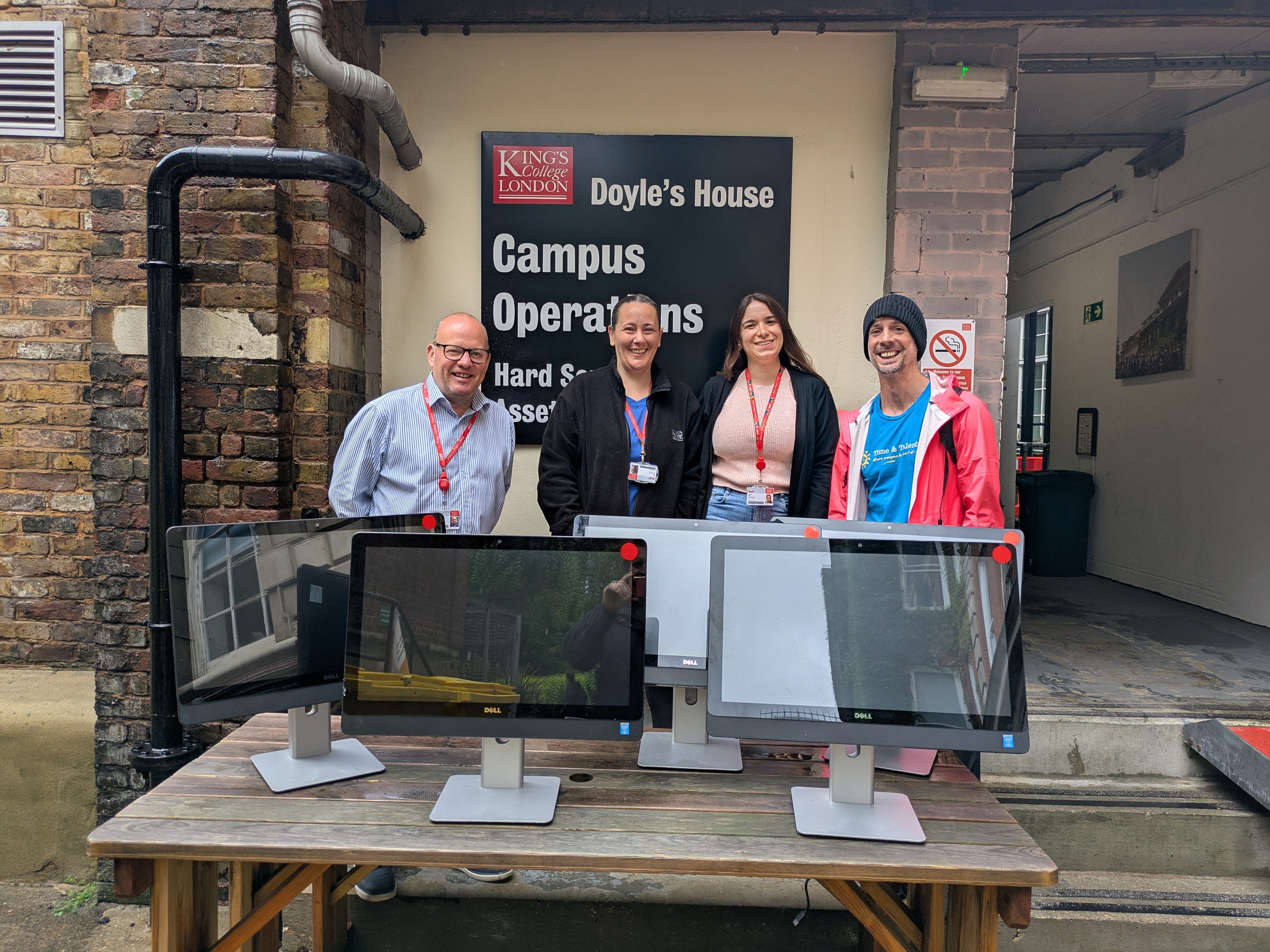
A circular economy focuses on minimising waste and pollution by keeping products and materials in use through sharing, repairing, refurbishing, and recycling, while restoring natural systems.
This year Tom, our Sustainable Operations Manager, has set up a Materials Exchange Whatsapp Group for swapping items, as well listing large jobs on platforms like A Good Thing, Olio, Plan Zheroes, and Too Good to Go.
And we’re pleased to say we can report some early successes. Over 9 months we’ve seen 400 items reused by 40 organisations, and over 70% of goods that have been offered have been taken. This has included a large amount of office monitors, desks, chairs, as well as the occasional printing press, grand piano and public art piece! Many, but not all, of these exchanges are supporting charitable projects.
Our annual Sustainability Awards have also highlighted great examples in our business community –
- Sollip has given new life to fruit and vegetables (pickles), tea (potpourri) and broken plates (practicing kintsugi).
- Morrisroe Demolition Ltd has recycled the glass façade of City Hall.
- Guy’s and St Thomas’ Hospitals are re-using sharps bins and walking aids.
- Norton Rose Fulbright has re-usable CauliBox containers in its canteen.
- London Bridge Station is sorting 25 waste streams which can now generate revenue.
- Tesco donated 17,000 meals to local charities with OLIO.
- TBC.London used 20 tonnes of salvaged steel beams in their building.
- Cityscapes replanted a garden from the Chelsea Flower Show, using recycled sand and concrete.
Join our circular economy
We are now embarking on a place-based circular economy action plan for London Bridge. What is the trash that can be turned into treasure?
There are three things you can do to help us.
- Scan the QR code to join the London Bridge materials exchange whatsapp group, or click here if you are on mobile.
- Tell us your own circular stories. Is there a waste stream produced by your business that you think could be of value? Or have you changed your procurement habits to purchase reused (or reusable) materials or goods?
- Tell us any examples you can think of in London Bridge that support repair and reuse, or maybe where we could do better (examples from elsewhere gladly received).
We will be running more activities to collaborate in the coming months, so contact Tom to get involved.